The Cultural Revolution which transpired during a period of the dictatorship of Mao Tse Tung from the sixties to the seventies, has never been more relevant today. A Marxist organisation called Black Lives Matter which, until now, had little or no success in the UK has hit the headlines recently as a result of the killing of a black suspect in the USA by the police. It appears that the US has a problem with trigger happy cops. Something we notably do not as our police are the only unarmed police in Europe. Indeed, there was no BLM protest when the armed division of the UK police intervened to shoot dead a terrorist who was wielding a large sabre and had already killed and injured several people during an attack in London a couple of years ago. As I write this, a knife wielding refugee has been shot dead by French police after he beheaded a French teacher who showed his class cartoons of Mohammed. No riots about this, I can guarantee.
It’s quite hard to join the dots between the killing of a black suspect in the US by trigger happy American cops and the current stance on racism and colonialism by some of our most hallowed cultural establishments such as the National Trust, the British Museum, the British Library, Edinburgh and Oxford University, to name but a few. Apparently, the killing of George Floyd, the suspect who died in police custody in the U.S. signifies that the U.K. too is a deeply racist country whose policemen randomly and routinely kill black people and who suffer the same discrimination as the segregated people of colour in the Deep South suffered during the Jim Crow era in the US. Our past involvement in slavery, even though Britain was the first country to abolish slavery, means in the words of the National Trust that it is committed to exposing the colonialist links of all its properties. If you are planning to visit Chartwell, the former home of Churchill, you will find this on the Overview section of the website:
“Churchill is both a celebrated and contested figure, known for his leadership during the Second World War but also for policies and political positions that privileged Britain’s imperial ambitions, to the detriment of Caribbean, African, South Asian and Middle Eastern communities. Views Churchill held on race are deeply problematic in the 21st century and it is important that we are able to acknowledge his failures as well as successes.”

The purpose of The National Trust is to “promote the permanent preservation for the benefit of the Nation of lands and tenements (including buildings) of beauty or historic interest” not to make politically charged statements of this kind. The National Trust should focus on its role of being the physical custodian of posh houses with their quaint tea cafes and shops, not in its interpretations of history, largely gleaned from Marxist academics on university campuses. These are the very people who have been “advising” them recently what to put on their website. One must assume that they make these statements in the hope that the left wing academics generating the BLM movement who despise the entire history of the British, including its works of art, will be pacified. They won’t. These kind of people are intent on erasure. There is nothing they would like better than that paintings, statues, or buildings are entirely removed from sight. For what purpose I am not sure. It certainly doesn’t improve materially in any way the lives of the minorities they profess to care about. Civilised people do not burn their history, whether good or bad.
After a summer of statue toppling in the U.S. or should we call it “The Summer of Love,” here are some of the casualties at home.
- The Geffrye Museum. Now swiftly renamed The Museum of the Home. Sir Robert Geffrye was a slave owner and someone who was involved in and profited from the enslavement of African people. Cancelled.

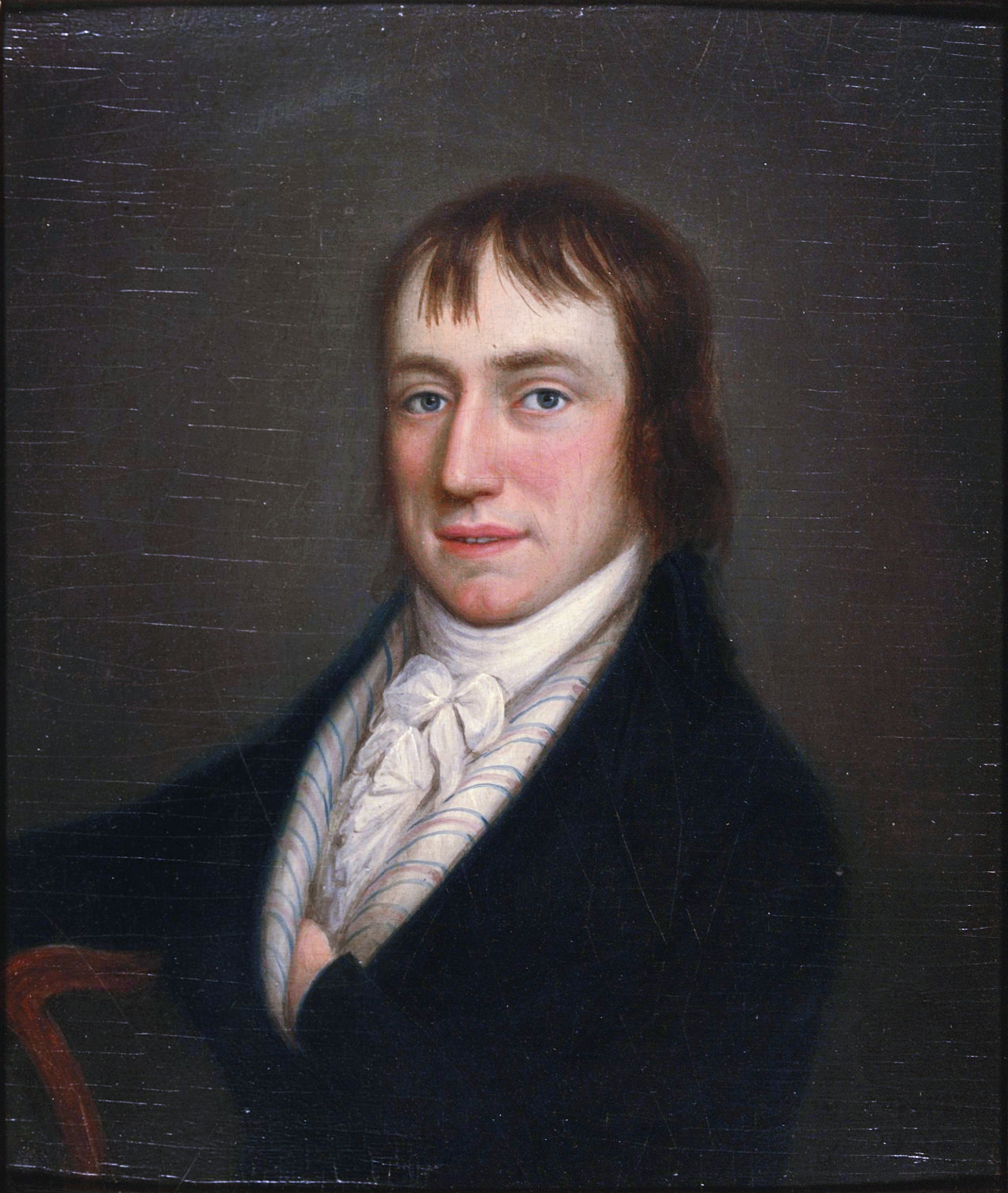
- William Wordsworth. His brother John captained an East India company ship to China. Wordsworth was never aboard this ship or had any involvement in slavery. Cancelled.
- The Assembly Rooms in Bath owned by the National Trust, singled out due to the city’s connections to the wider colonial and slave economies in the 18th century, often described in the novels of Jane Austen. Cancelled.

- Oxford University Pitts Rivers museum removed its shrunken head collection which came from the rainforests of Ecuador and Peru. The museum thinks they “reinforce racist stereotypes about savage cultures.” Cancelled.
- Warwick Castle removed a painting which depicted an image of a black servant with Sir Robert Greville which might “make people think about slavery.” Cancelled.

- Bristol. Colston. No further explanation needed. Cancelled.
- Rhodes, Oxford. No further explanation needed. Cancelled.
- Edinburgh University. David Hume. The major enlightenment thinker and philosopher in Scotland around whom there is a substantial body of research and teaching. His name was removed from a building as he had some offensive views on race. The Scottish scholars who have done their PhD studies on Hume and taught his work in courses are, naturally, quite baffled by this. They sent a letter of protest expressing their “strong objection” to the move, stating that it damages the university’s reputation by sending a message that “lacks an ability to deal with these issues with any nuance.” It also suggests the university regards anyone who specialises in Hume as “dubious or disreputable.” Cancelled.

- The Natural History Museum. An offensive Darwin collection is being removed because HMS Beagle’s Galapagos voyage was colonialist. Rooms, statues and collected items in the museum that could be “problematic” may be renamed, relabelled or removed completely. “Science, racism and colonial power were inherently entwined,” gushes one of the academics responsible for the collection. HMS Beagle was cited as one of Britain’s many colonialist scientific expeditions. Cancelled.

- The British Museum. “Museums were put in place to legitimise a racist ideology,” spouts one of their academic advisors. By this logic, the BM should be closed down and everything in it repatriated, if that were possible. The flora collection of Sir Hans Sloane, one of the British Museum’s founders is under review for removal. He was labelled a slave owner by the BM, though it was his wife who owned plantations, and his bust removed from public view. Cancelled.

- The Mayor of London is currently “reviewing” street names, statues and works of art” as this is desperately important during a major health and economic crisis. Unfortunately, we can’t cancel him right now as elections have been suspended.
- Rex Whistler restaurant murals. Tate Britain. Thankfully, this remains closed for now during the pandemic. Not cancelled for now.
- The British Library. Liz Jolly, a curator, writes that “racism is the creation of white people.” A statement that is dubious in its own right. The Decolonisation Working Group reported concerns with many artefacts on show, such as the busts of founders and a portrait of Mr Punch. The director went so far as to say: “The killing of George Floyd and the BLM movement is the biggest challenge to the complacency of organisations, institutions and ways of doing things that we’re likely to see in our lifetimes. There have been incremental changes over the years but this is a wake up call for the library’s leadership that it’s not enough.” What is not enough? Having the finest collection of manuscripts and books which are freely accessible in the Western world is not enough? How many of them are going to be removed in case of hurt feelings? Cancelled.

- Kew Gardens. Yep. Even plants can be racist. “Much of Kew’s work in the 19th century focussed on the movement of plants around the British Empire, which means we too have a legacy that is deeply rooted in colonialism. The traces of colonial exploitation are not endemic to botany, they are everywhere, from the socio-economic inequalities in marginalised communities to the diamonds in wedding rings……In my own field of research, you can see an imperialist view prevail. Scientists have appropriated indigenous knowledge and downplayed its depth and complexity……BLM is showing how today’s inequalities and indiscrimination are deeply rooted in our societies. At Kew, we aim to tackle structural racism in plant and fungal science……and updating the western-centric labels we use to describe these plants,” says Professor Alexandre Antonelli, Head of Science at Kew. He’s from Brazil where the Portugese had no small role in African slavery, but I guess he’s not telling us about that. Phew! Now I know not to enjoy myself too much next time I go for a wander round Kew admiring the beautiful flowers. Cancelled.

- Philip Guston, American-Canadian modern artist. As I write, an exhibition of his work due to take place and hosted by Tate Modern and the Museum of Fine Art in Boston” among others, has been “postponed” due to the social commentary in his paintings, depicting the KKK. The National Gallery of Art in the US, says the public doesn’t need a “white artist to explain racism right now” and they are “putting it off until a time at which we think that the powerful message of social and racial justice that is at the center of Philip Guston’s work can be more clearly interpreted.” His paintings were made precisely at the time of the Civil Rights Movement in the seventies and thus reflect what was happening at the time when KKK members were openly demonstrating in his home town of LA. Apparently, according the the National Gallery director, Guston “appropriated images of Black trauma, the show needs to be about more than Guston.” Stop right there. No need to dig yourself further into the hole you’ve made for yourself. Cancelled. For now.

So who are BLM? According to their founders, they are “trained Marxists” who want to dismantle capitalism, say climate change is racist, want to abolish prisons, wants to get rid of borders, wants to get rid of the police, says the appointment of Munira Mirza to set up a commission on racial inequality is racist, says the Suffragettes were racist as they were working to advance white power, says Churchill is staunchly racist, describes big charities as “colonisers,” says they would like to dismantle the patriarchal family and advance the cause particularly of black, trans women. Surely, as Jordan Peterson points out in the foreword of Alexander Solzhenitsyn’s “The Gulag Archipelago”, to call yourself a trained Marxist is to be complicit in the crimes of the Communist regimes which came tumbling down in 1989. It’s not like we don’t know what they did.
“The dangers of the utopian vision have been laid bare, even if the reasons those dangers exist have not yet been fully and acceptably articulated. If there was any excuse to be a Marxist in 1917…..there is absolutely and finally no excuse now. It was Solzhenitsyn who warned us that the catastrophes of the Soviet state were inextricably and casually linked to the deceitful blandishments of the Marxist utopian vision. ” I am sure Solzhenitsyn must be turning in his grave at the thought that Museums and Galleries are enthusiastically removing their artefacts at the behest of the Marxist ideologues he warned the West about.
What about the academics who advise these organisations? The majority of Arts courses, including art history have been thoroughly infiltrated by Marxist theory and postmodernist philosophy from the sixties and seventies: an authoritarian ideology, hostile to the rule of reason whose ideologues seek to persecute, cancel and censor free speech and discourse and impose their world view on every institution in the country. Does that sound suspiciously like a Communist dictatorship? Critical race theory and Social Justice theory are the main elements of this intolerant ideology. Most of this emanates from the campuses of the US over the past 30 years but is now firmly established in our universities. For years, Arts courses, including history of art, have promulgated grievance studies about race, gender, feminism and lately, the trans movement. Not content with the arts and humanities, they are now focussing their attention on the horrible racist STEM subjects. They now position themselves to “advise” directors about their racist plants or paintings. What were previously esoteric obscure notions confined to the campus about queer theory, queer performativity, white fragility, white privilege, intersectional feminism, unconscious racism and gender fluidity has gone mainstream in our cultural institutions, schools and places of work. We have seen mobs on US campuses, hold the equivalent of Maoist “struggle sessions” armed with clubs and threats of real physical violence (re: Evergreen State College in 2017). The UK is never far behind and many universities have been forced to formally restrict speech, especially certain views of religion and trans identity. Feminists like Julie Bindel who herself participated in many aspects of the grievance culture, now find themselves de-platformed by the trans activists on campus. As I said, having beavered their way through the humanities and arts, the focus is now on STEM subjects. Engineering must be “reconceptualised to make it sensitive to difference, power and privilege.” Yes dear, but can you build a bridge or construct a road that doesn’t fall down? The authors who have written a detailed explanation of these campus theories, Helen Pluckrose and James Lindsay in “Critical Theories. How universities made everything about race, gender and identity- And why this harms everyone,” have no hesitation in describing this ideology as “the least tolerant and most authoritarian ideology since the widespread decline in communism.”
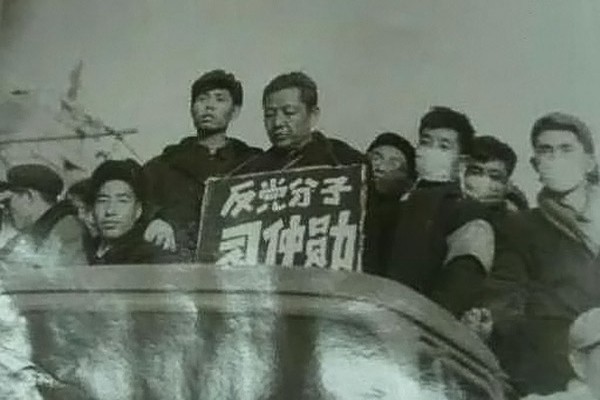
The reaction of the general public has been generally to laugh off this stuff as bonkers, PC gone mad and the politicians has been to ignore it and let the universities get on with it. They appear to be waking up from their slumber at last. In a rare moment of common sense, after the “Summer of Love” and various statements from museums, Oliver Dowd the Culture Secretary wrote to these institutions to inform them that much of their work is funded by public money – that’s us serfs who pay taxes – and maybe they’d better wind their necks in a bit. The authors Pluckrose and Lindsay merely ask that we uphold the principles of western liberalism rather than find ourselves on the very slippery slope to the kind of Maoist whirlwind of mass murder, looting, destruction, incarceration, denunciations and even cannibalism during the so called Cultural Revolution in China.
 Art history Unchained.