Imagine that you are a school student and you discover one day that one of your teachers was cooked and eaten by his students. It may well appear to be a malevolent wish, but it is an event that actually did happen during the Cultural Revolution which occurred in China during the sixties and seventies. Centuries long ancient culture such as calligraphy, books, paintings and other artefacts suddenly disappeared from view, destroyed by the Red Guard who acted on behalf of Chairman Mao. Artists, poets, playwrights, potters and writers were subject to persecution and even death. Some committed suicide in a desperate bid not to be tortured or beaten or put their families in danger. In the movie “Balzac and the Little Seamstress” a student who appreciates French literature is found guilty of having novels by Balzac in his possession and is sentenced to internment in a “re-education camp.” These camps were, in fact, places in the remote countryside where those who had fallen foul of the authorities were sent to perform hard labour and gruelling work such as carrying buckets of manure on one’s shoulders.
Perhaps a little less well known horrifying fact to emerge was cannibalism which arose in the province of Wuxuan, a tactic which was deliberately created to terrorise and humiliate “the enemy.” In 1993, a book published by investigative journalist and novelist Zheng Yi called “Scarlet Memorial: Tales of Cannibalism in Modern China,” contains graphic and horrifying detail of the victims of cannibalism during the Cultural Revolution, using local government documents, eye witness accounts and confessions. Although a Red Guard himself at one time. Zheng became disillusioned by the violence he had seen and was arrested for his participation in the Tiananmen uprising and the Chinese democracy movement of 1989. He escaped and went into hiding until he was able to get to Hong Kong and eventually sought asylum in the USA. His research centred on Wuxuan County and the investigations took place in 1986. His research eventually turned into a book which was published in Taiwan. There are photos showing Wuxuan Middle School canteen where the flesh of victims was boiled and eaten. He documented one case of a Wuxuan Middle School student Zhang Puchen who was beaten to death and had his heart and liver removed to be eaten. Human livers were even considered a delicacy.
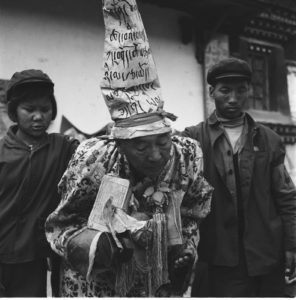
One of the witnesses commented: “I realised that the Cultural Revolution was merely a struggle among top leaders. The more I saw, the more I felt used. As Zheng Yi himself said: “The frenzy was not caused by some uncontrollable defect in human nature. It was a violent act caused directly by the very same class struggle advocated by Marxism-Leninism-Mao thought, armed by the theory of proletarian dictatorship, silently agreed upon and directly organised by the powerful organisations of the Communist Party.” During this dreadful period, thousands of innocent people were accused of being “counter-revolutionaries” or “rightists” leading to social ostracism, prison, loss of work, public humiliation through wearing dunces caps and being paraded around and berated, or even death through beatings at the hands of mobs.
The emergence of Critical Theory in Western universities, which is Marxism by another name, has studied how Mao kept his grip on the Chinese nation. First you erase the past. As Orwell said: “Those who control the past, control the future.” You make people feel ashamed of their country and its past. You have to convince the young and children that the country you are living in is so terrible that all attachments to the past, tradition and family must be destroyed. Exactly the mantra of Critical Theory. The current toppling of statues, banning books and works of art is a direct leaf out of Mao’s page. By the end of the Cultural Revolution there was only one book you could read in the whole of China and that was The Little Red Book which made Mao a millionaire! I see that we are following a similar path. The Twitter and campus outrages over someone’s politically incorrect opinions or books or paintings, are very similar to Maoist struggle sessions and denouncements. They don’t yet lead to torture and imprisonment or mass murder but that is the way we are heading. I imagine the freedom fighters in Hong Kong must be looking at us and shaking their heads with incomprehension. Why would we think it good to copy Mao?
Like the Nazi looters who were to come, according to Jung Chan in her biography of Mao, artefacts and books that were looted by the Red Guard and weren’t destroyed,sometimes mysteriously came into his possession. With remarkable foresight, Chang Kai Shek, during his flight to Taiwan, took many scrolls, paintings, pottery and other precious objects and artefacts with him to Taiwan where they now currently reside in the Taipei National Museum. During the unfreezing of relations between Taiwan and mainland China, tourists from China flocked to see the wonders contained within the museum.
Let us take a look at the artists who were persecuted by the regime for the crime of being artists.
Pan Tianshou probably one of the best known of these artists.
He was born in 1897 in Zhejiang Province. From an early age, he liked calligraphy and illustrating novels. In Spring 1910, he enrolled in Zhengxue Primary school where he received a Western education. He self studied Chinese painting and was so captivated by it that he determined to become an artist and devote his whole life to it. His other interests were calligraphy, poetry and seal carving. Perhaps his most famous painting is “Lonely Crow on Aged Tree” painted around 1922. In January 1925, he completed “The History of Chinese Painting” which was published in Shanghai in July 1926. He went on to co-found Shanghai Xinhua School of Fine Arts. He was appointed director of the National Academy in 1945 but lost his job to someone more politically acceptable to the Kuomintang, the party of Chang Kai Shek. His downfall began in 1966 when he was arrested by the Red Guard who paraded him through the streets with a number of other colleagues in Hangzhou, wearing dunce caps, a typical act of humiliation throughout the terror. Until his death in 1971, he was regularly paraded around public rallies to be denounced and criticised. He was falsely accused of being a Kuomintang spy. Click on the link below to see his work.
http://www.chinaonlinemuseum.com/painting-pan-tianshou.php
Lin Fengmian
Considered a pioneer for his fusion of Western and Chinese styles, who studied in Paris at the Ecole National Superieure des Beaux-Arts under the tutelage of Fernand Cormon. In 1923, he moved to Berlin for further studies and returned to China in 1926 where he became the principal of the National Beijing Fine Art School. He went on to teach Western painting at the Huangzhou National College of Art which he founded. His artistic career was marked by tragedy. Firstly many of his works were destroyed by Japanese soldiers during the Occupation and latterly by his own compatriots during the Cultural Revolution. After being subjected to criticism and denouncement by Communist leaders, the usual pattern of behaviour, he thought it timely to destroy his own work. This didn’t save him from prison. He was granted permission to leave China to reunite with his family in Brazil but made his way back to Hong Kong until his death in 1991. Undoubtedly, he would be horrified by what is taking place in Hong Kong today. Follow the link below to see his work.
https://www.wikiart.org/en/lin-fengmian
Li Keran
One of the most important artists of the second half of the latter half of the 20th century and a teacher at the Central Academy of Fine Arts. He was mentored by Qi Baishi and Huang Binhong, two of the most influential masters of Chinese painting. Li also studied like others Western art under Lin Fengmian and the French professor Andre Claudot. In 1931, he joined the Eighteen Art Society but this was closed for political reasons by the Government of the day. During the war with Japan, he worked for the Nationalist Government and created propaganda posters and murals of an anti Japanese nature. Li strongly believed in working in plein air and from nature, from which sprung his dramatic and significant landscape paintings. He took up a post at the National Academy of Arts in 1946. During the Cultural Revolution, Li, like so many artists, became a target of criticism for his unique style, the black landscape paintings. He managed to survive and rehabilitate himself into society and was appointed as the first President of China National Academy of Painting in 1979. In later life, he became esteemed and was followed by many artists influenced by his style. Follow the link below to see his work.
http://www.chinaonlinemuseum.com/painting-li-keran.php
Shi Lu
Shi Lu was from a wealthy background but joined the Communist Party in 1949 and was elected an executive member of the China Artists Association. He seemed to be in favour for a while, travelling to India to supervise the Chinese pavilion at an international expo. Like all those who get too close to a scorpion, sooner or later they feel the lash of its tail, and he fell rapidly from grace with his large scale painting due to be displayed in the Great Hall of the People in Beijing. The painting which depicts Mao in the Shaanxi mountains in 1947, leading his troops against the Nationalists, was considered disrespectful to Mao as he appeared too small and had his back turned to the viewer. Shi Lu refused to change the painting and he became yet another victim of the Red Guard. He was imprisoned and denied all access to art materials which led to him having a mental breakdown and falsely diagnosed with schizophrenia. After his release in 1970, he quickly resumed his art career, using sketches he had made in India and Egypt as a resource. Follow the link below to see his work.
http://www.artnet.com/artists/shi-lu/
Sources: Scarlet Memorial: Tales of Cannibalism in Modern China. Published 1993. Author: Zheng Yi.
Mao: The Untold Story. Published 2005. Jung Chang and Michael Halliday.
 Art history Unchained.