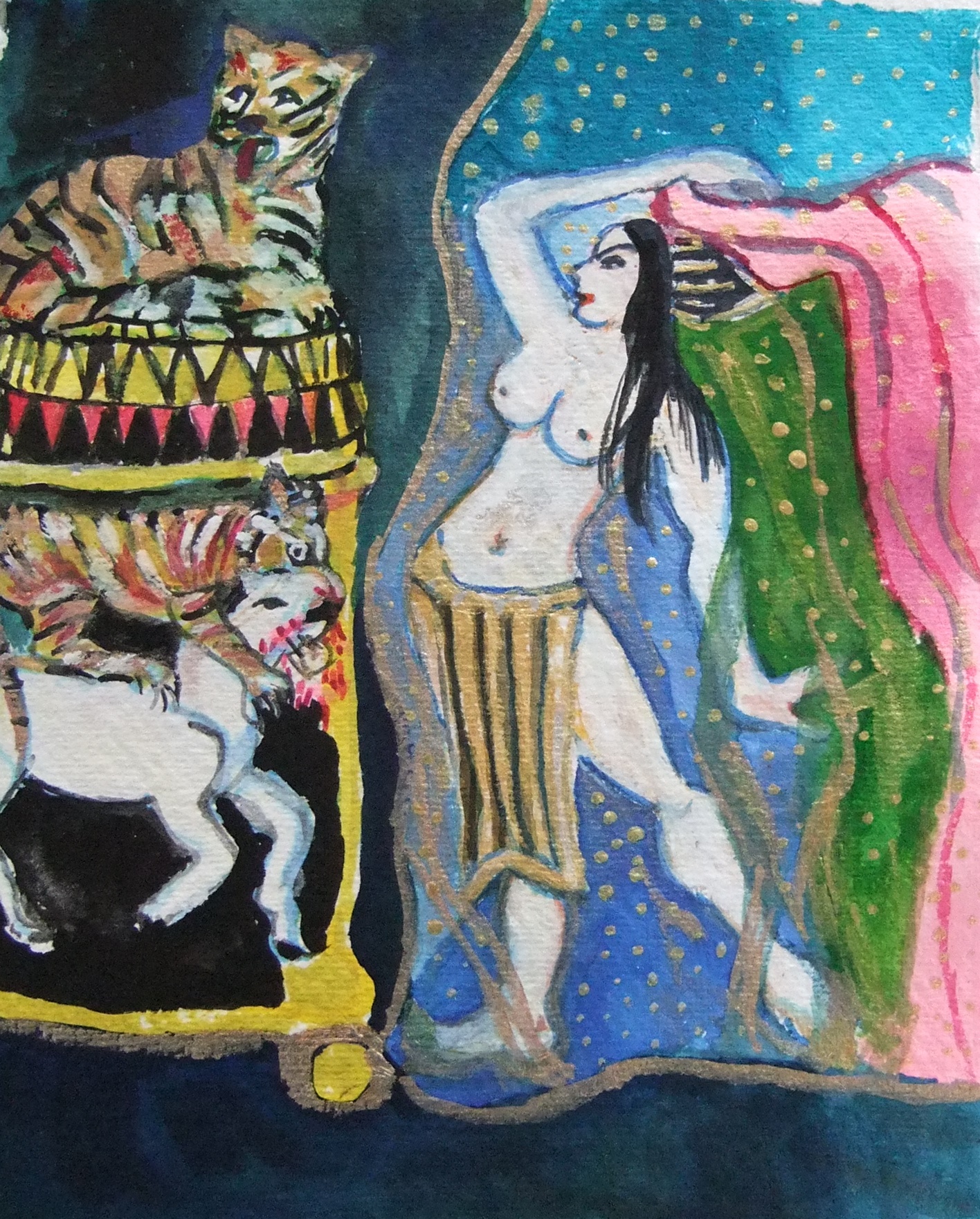
An artist talk at the Jewish Museum in New York, was disrupted last month by anti-Zionist and pro Palestinian protesters condemning the exhibition by Israeli artist Zoya Cherkassky of her depictions of the 7 October 2023 massacres by Hamas. The exhibition, apparently, serves as “imperial propaganda” and “manufacturing consent for genocide” which is all rather curious as the Hamas genocidal actions on 7th October, targeting mainly Israeli citizens have either been overlooked, denied or quickly memory-holed.
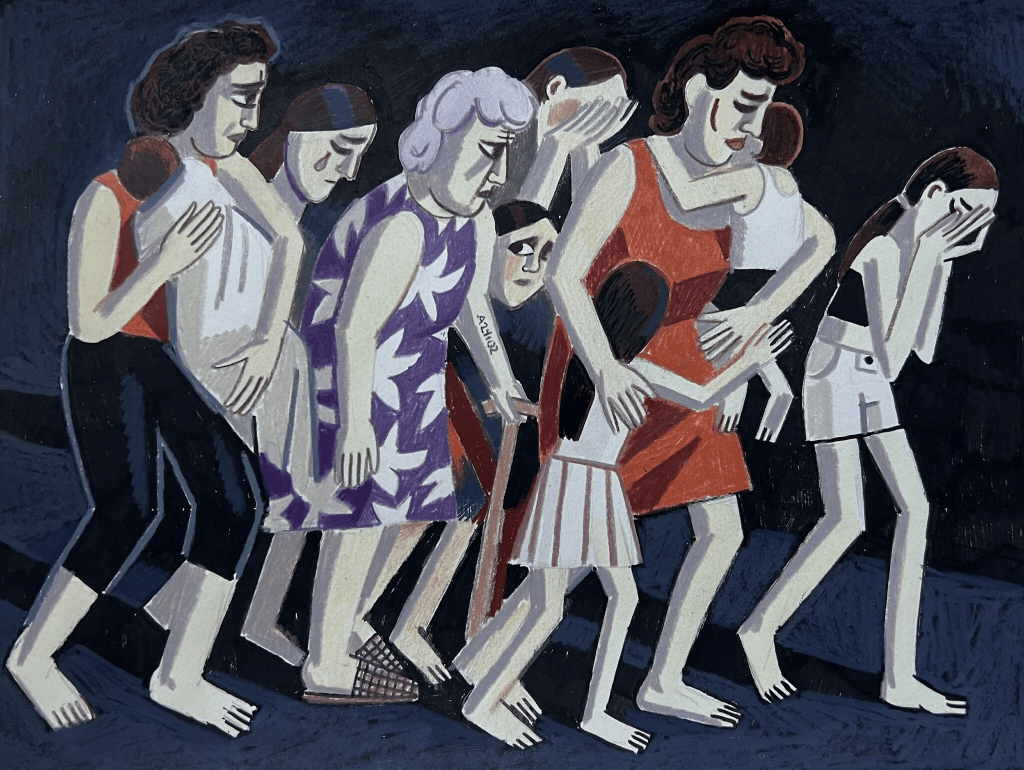
“Kidnapped women” Zoya Cherkassky, 2023. From “Times of Israel.”
The Museum has chosen to proceed with the exhibition, much to the chagrin of the censors who would wish to close it down. Her previous exhibition in New York in 2022, attracted no such negative publicity.
Zoya is from a Ukrainian background, wife of a Nigerian Israeli and mother of a mixed race child. It is common in the multi cultural society of Israel, usually described as “an apartheid state,” to find these kind of “combinations.” Zoya is herself a refugee, moving to Israel just before the collapse of the Soviet Union. In spite of nearly the whole population of Israel consisting of refugees, the popular refrain of the Marxist left is to “go back to where you came from,” a refrain which they would consider racist if applied to other refugees.
Viewing these paintings, I would describe her as a folk artist probably most reminiscent of Marc Chagall, though she does have her own unique style. I find them utterly charming and informative, like her autobiography through art. The works she made after October 7th are completely in line with a long history of artists who have chronicled the events of war through paintings or sculpture, the most well known, of course, being “Guernica” by Picasso. We have our own esteemed British artists such as Frank Brangwyn, Augustus John, Laura Knight, Graham Sutherland, Henry Moore to name but a few who chronicled WW1 and 2. Then there are artists such as Manet and Goya who vividly portrayed the devastations and ravages of war on the European continent. It seems like war will always be with us and artists feel the need to engage with it and depict it. There is absolutely no reason why this artist should be hounded or decried for portraying the assault that was made upon her country more than any other artists. For a fuller account of her work and life, read the following link.
https://www.tabletmag.com/sections/arts-letters/articles/hoberman-zoya-cherkassky

“Guernica” Pablo Picasso, 1937. Wikimedia Commons.
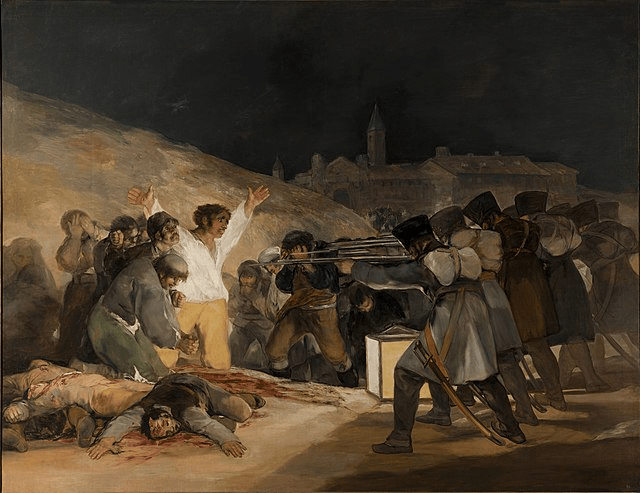
“El Tres de Mayo,” Goya, 1814. Wikimedia Commons.
March, 2023.
 Art history Unchained.