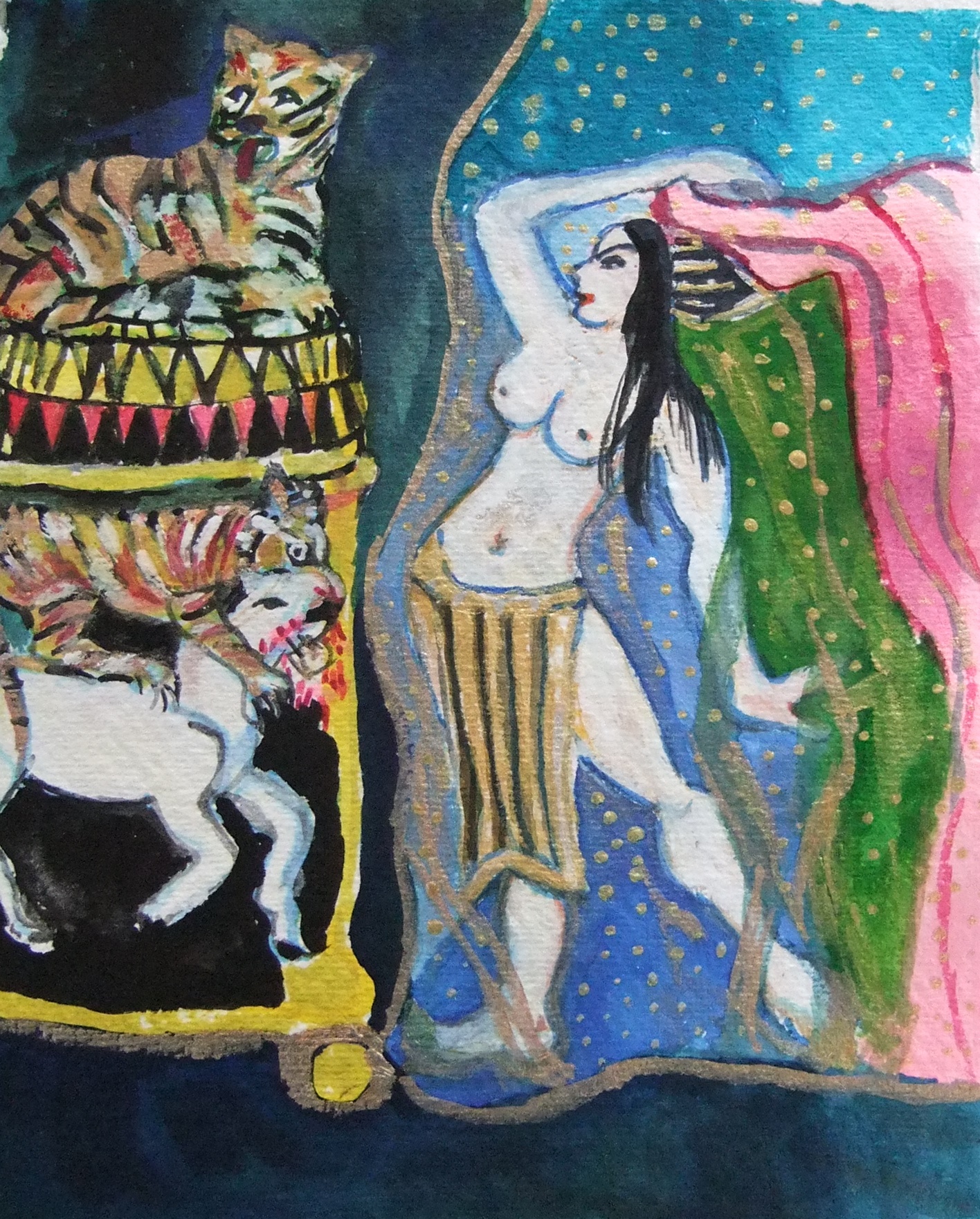
The Fitzwilliam Museum in Cambridge decided on a rehang of its collection which has just reopened to the public. By now, we usually know what that means. Though the director Luke Syson insisted that the new presentation was not woke but just a different “way of seeing” to quote John Berger.
“I would love to think that there’s a way of telling these larger, more inclusive histories that doesn’t feel as it if requires a push-back from those who try to suggest that any interest in this work is what would now be called woke,” he told the press. “Being inclusive and representative shouldn’t be controversial, it should be enriching.”
So far, so good but it didn’t take long for the art critics to pick up on some of the more absurd signage. One of the signs in the Nature Gallery, showing the work of John Constable’s paintings of English hills and Hampstead Heath, noted that the artwork can “stir feelings of pride towards a homeland and there is a darker side to this nationalist feeling.” It states that this national sentiment comes with the “implication that only those with a historical tie to the land have a right to belong.” “Paintings showing rolling English hills or lush French fields reinforced loyalty and pride towards a homeland.”
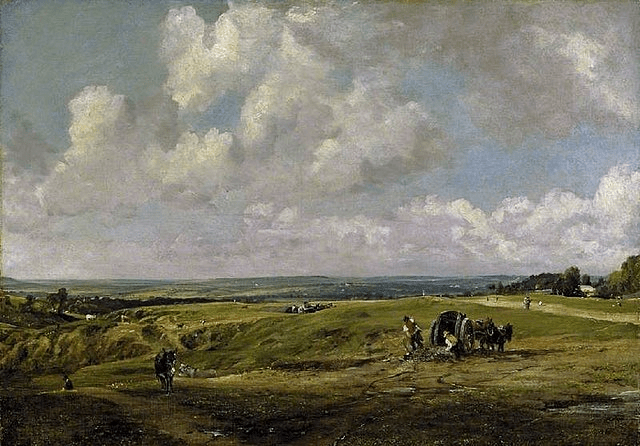
Hampstead Heath, 1820, Fitzwilliam Museum, Wikimedia Commons.
Really? When I am admiring the sheer beauty of Constable’s landscapes, the manner in which he paints the scudding, scurrying sky full of loosely painted clouds, I can feel the breeze blowing in my face, and smell the scent of fresh grass and flowers. The farm labourers carrying out their tasks, the little shepherd boy who stops to languidly take a refreshing drink of water by a stream with his flock of sheep, a cricket game in the distance, the taste of sea water on your lips in his seascapes. And yes, the English countryside is beautiful! They do indeed evoke feelings but not of wanting to join the National Front or the local chapter of the white supremacist group or whatever else is being implied in this classic case of projection. Who are these people to judge the emotional responses of viewers who see these paintings?
Works by John Singer Sargent are subject to speculation that he “led a secret, queer life.” There you go, must get a bit of Queer Theory in as well as Critical Race Theory. Do they have nothing of any interest to say about this superb artist?
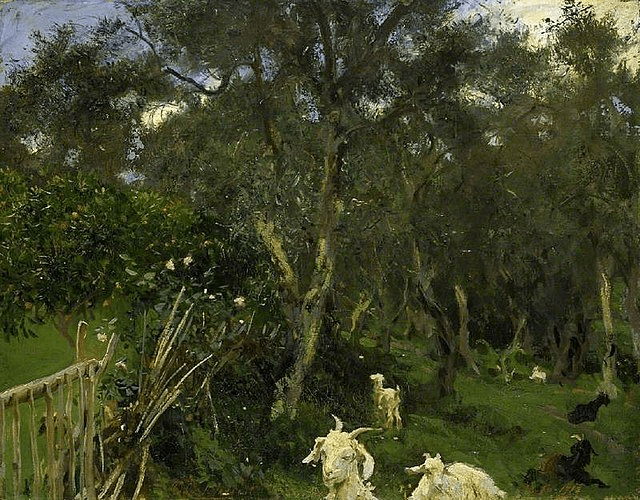
John Singer Sargent, Olives in Corfu, Fitzwilliam Museum, 1909, Wikimedia Commons.
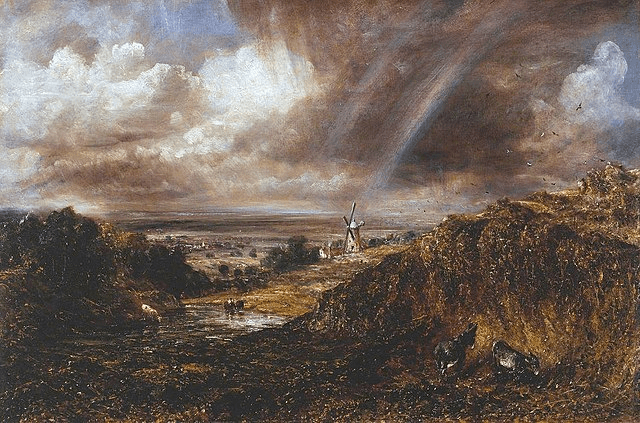
Hampstead Heath with a rainbow, 1836, Tate Britain, Wikimedia Commons.
Museums now employ the equivalent of internet trolls whose main objective is to stir up guilt, anger and poke the general public with a stick. Can we have our museums back? They are now infested with political activists who obviously have no interest in their main job which is to conserve and promote their collections. Surely we have the laziest generation of art historians ever, who merely cut and paste from set texts on Queer Theory and Critical Theory with no sense of how ridiculous their statements sound to normal people?
March 2024
#Queer Theory, Critical Race Theory, John Constable, Fitzwilliam Museum.
 Art history Unchained.